Key takeaways:
- Mobile payments and banking apps have changed how many Gen Zers think about money.
- Cash can feel separate from everyday budgets, especially when it comes from tips, side gigs, and gifts.
- That separation often turns cash into "fun money" for treats and impulse purchases.
- Digital notifications can make card purchases feel more visible than cash spending.
- Tracking cash and assigning it a purpose can help make spending more intentional.
- Mobile payments and banking apps have changed how many Gen Zers think about money.
- Cash can feel separate from everyday budgets, especially when it comes from tips, side gigs, and gifts.
- That separation often turns cash into "fun money" for treats and impulse purchases.
- Digital notifications can make card purchases feel more visible than cash spending.
- Tracking cash and assigning it a purpose can help make spending more intentional.
Gen Z has grown up making purchases with a double-click, a Face ID scan, and a tap. Over time, these mobile payments have made physical cash feel less “real” to many young spenders. For a generation raised on digital banking apps, cash transactions can feel disconnected from the reality of spending because the number on the screen stays the same—reshaping everyday consumer behavior around money.
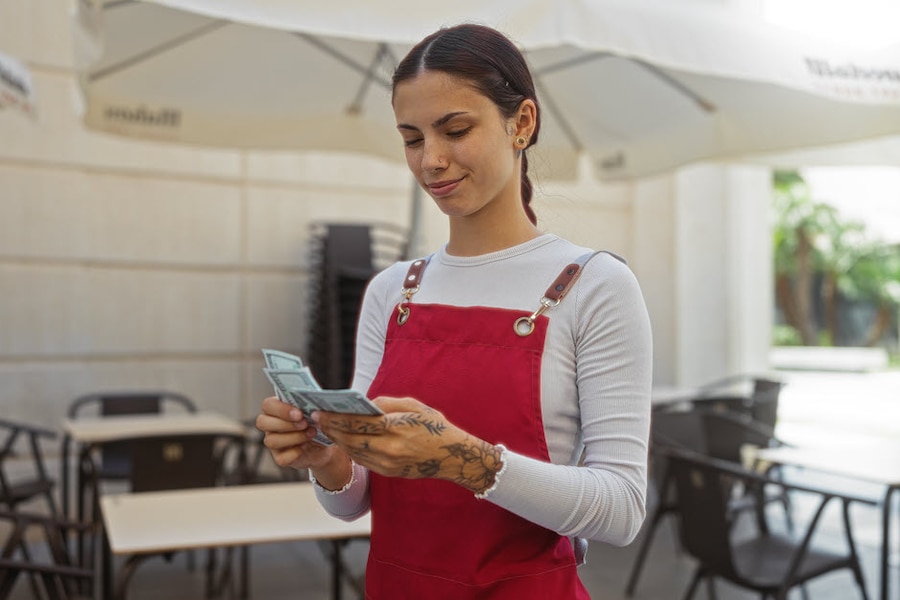
Chicago-based restaurant server and actress Aspen Snyder puts it bluntly, “This is a main pillar of my personality: that cash is not real for me.” She’s far from alone in her feelings.
When cash feels like a loophole
"The digital age has changed how Gen Z interacts with money," says Dr. Kristy Archuleta, a professor in the financial planning program at the University of Georgia. "They've never known a time without instant access to everything, including their bank accounts right on their phones."
Globally, digital wallets are becoming the norm and Gen Z is leading the charge, with 91% of the generation adopting mobile payments, according to a report by PYMNTS.com. When actual cash shows up, from birthdays, babysitting, or tip money, young spenders can be unsure of what to spend it on—often treating it differently from money accessed through a debit card or app.
"Most young adults today grew up in a digital world where they rarely carry cash. Apps handle transfers between friends, and many places don't even take paper money anymore," says Dr. Archuleta. "When they do have physical cash, it doesn't feel like part of their regular bank balance. It registers as 'extra' or separate, which makes it easier to treat as guilt-free spending money for fun things."
Aspen says her cash spending is almost always impulsive. "Any cash purchase of mine is usually going to be a coffee, lunch, or a random treat," she says. "I don't use cash for groceries, I don't use cash for gas, I don't use cash for anything that I've budgeted for. It's always an extra expense."
Vivian Richey, a senior at Columbia College Chicago agrees and says that cash tends to be something to burn off. "I usually use my card for everything," she says. "The only time I really use cash is if I just have it on me and I'm trying to get rid of it." Vivian says that as she's gotten older, different payment methods have changed how she gets paid and influenced her spending habits and spending behavior. "I have direct deposit, so all of my money goes to my card. If I'm taking cash out, it's usually for something fun," she says.
But cash isn’t disappearing
Even as cashless payments become the norm, considerable amounts of side gig money still arrive the old-fashioned way: tips, cash payments, and leftover change.
Side hustles are also increasingly common for young professionals. These side gigs can include restaurant serving, pet sitting, bartending, moving help, and more. The Harris Poll reports that over half of Gen Z has side gigs.
"I have never put cash tips into my account, ever," Aspen says. "I have a little cup in my room that all my cash goes in. Anytime I feel like spending money that is 'free,' I get my money out of there."
In other words, if the money doesn't show up in your credit card statement or your monthly budget, it can feel like it doesn't "count." That means over half of a generation is earning extra money in a format that may not directly factor into the tools they use to budget. The result is additional income that can be easy to underestimate, forget, or spend without noticing.
Why the “pain of paying” may be changing
Dr. Scott Rick, a consumer research expert, associate professor of marketing at the University of Michigan, and author of Tightwads and Spendthrifts: Navigating the Money Minefield in Real Relationships, says the "cash for treats" phenomenon is "mental accounting 101"—a classic example of how the pain of payment shapes consumer behavior.
"If you normally pay for everything with a card, then you can earmark cash for small treats," Dr. Rick says. "Withdrawing the cash from your account and seeing your balance drop is the pain point. But once it's withdrawn and in your wallet, spending cash causes no further changes to your bank account balances."
This is where things can get tricky for a digital-first generation. If your main financial frame of reference is an app balance and transaction notifications, cash can become invisible to the system.
MIT Sloan School of Management notes that people tend to spend more when using credit cards than cash, because the immediate pain can be less noticeable. However, with the ubiquity of digital banking apps and credit card notifications, many young spenders are starting to find that digital payments—once associated with less pain—can actually feel more painful than cash.
"Payment methods that force you to pay attention to the amount of money leaving your possession will generally be most painful," Dr. Rick says. With digital notifications popping up on your phone screen each time you pay for something, credit card payments can be far more painful than they once were.
Dr. Rick noticed this phenomenon on a recent trip to Disneyland with his family where his Disney Visa card was linked to his phone. "Normally, when I pay with credit, I never even look at the receipt and have no real memory of how much I'm spending," he says. "But with my Apple Wallet [notifications], I kept having to revisit all my recent transactions, and at Disneyland, there were many. You would think paying with your phone and never even having to touch a physical wallet would be frictionless and painless. But I found it incredibly painful."
Money on your mind?
Schwab’s Choiceology podcast, hosted by Wharton professor Katy Milkman, also explores how small shifts in thinking about money can strongly impact our financial decision-making.
Listen to Choicelology
Simple ways cash can feel more real
For people who want cash to feel more real and tangible, it often comes down to changing how they use it. "If you want to slow your spending down, you need to install some psychological speedbumps," Dr. Rick says. "Add friction to the spending process."
Here are a few ways that can show up in practice:
- Logging cash like a card swipe. Some people who track spending digitally add a recurring spending habit: they record cash purchases as they happen (in a notes app, spreadsheet, or budgeting tool) so cash doesn't disappear from view.
- Giving cash a job immediately. When cash is meant for savings or bills, others move it into their system fast: by depositing it (or converting it to a digital transfer) on a set day each week.
- Spending on purpose. For those who want a fun-money category, defining it ahead of time can matter. Withdrawing a set weekly amount and labeling it "fun" makes the spending feel planned, not random.
Whether your money lives as paper in your pocket or numbers on your phone screen, the real power move is the same: making it visible enough that you can choose what happens next.
Take steps in your journey towards financial security
Managing your money can be complicated. That's why we're here to help.
More from Charles Schwab

The newest family CFO? Gen Alpha

From TV to TikTok, live shopping is everywhere—and harder to resist.
